

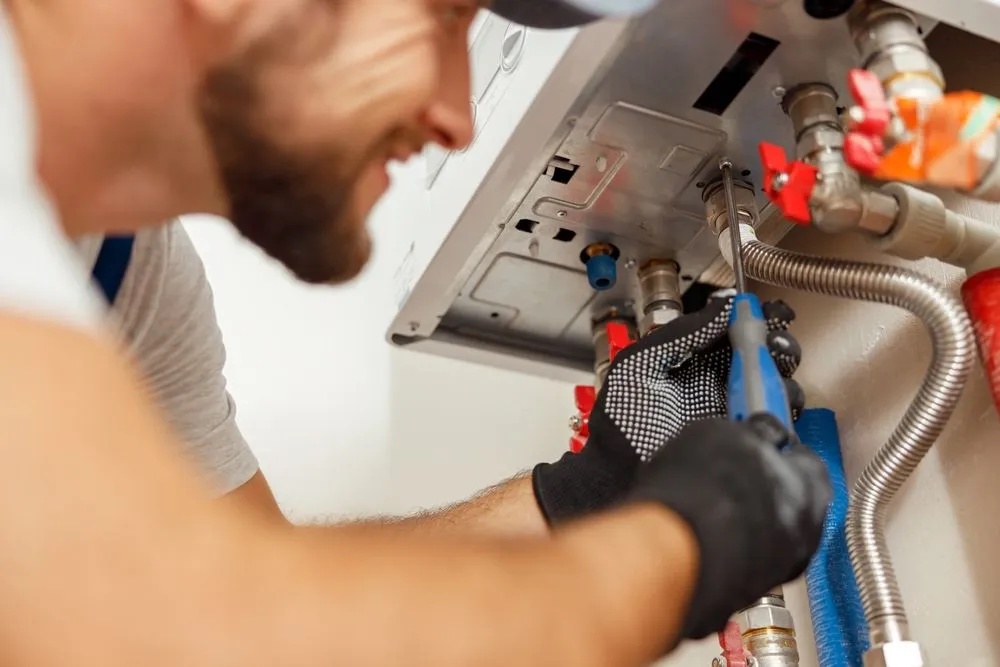
Water Heater Repair, Installation & Anode Rod Replacement in New Philadelphia, OH
Water heater repair, leaking tanks, anode rod replacement and tankless installation.
Every home relies on a steady, dependable supply of hot water for morning showers, dishwashing, and laundry. When a water heater stops producing warm water, starts leaking from the tank, or makes unusual rumbling noises, your entire household routine comes to a halt. At Geer Plumbing Solutions, we provide comprehensive water heater services for homeowners in New Philadelphia, Dover, and throughout Tuscarawas County, Ohio. From precise repairs on electric and gas systems to proactive anode rod replacement and high-efficiency tankless water heater installation, our licensed plumbing professionals ensure your home has reliable hot water year-round.
We take an educational approach to plumbing work. Rather than pushing quick fixes or unnecessary equipment replacements, we take the time to evaluate your entire hot water system, explain our findings, and present clear options. Founded on our "Trust Triangle"—combining technical skill to diagnose and repair, open communication to inform, and complete integrity to recommend only the necessary work—we bring dependable craftsmanship directly to your door.

On This Page
Diagnostic & Repair Services for Electric Water Heaters Water Heater Leaking: Fast Diagnosis and Prevention Water Heater Anode Rod Replacement to Extend Tank Life Tankless Water Heater Installation in Tuscarawas County Understanding New Water Heater Costs and Selection Factors The Geer Plumbing Solutions Approach: Skill, Communication, and Integrity Frequently Asked Questions About Water Heater ServicesDiagnostic & Repair Services for Electric Water Heaters
Electric water heaters rely on a coordinated system of heating elements, thermostats, and electrical connections to keep your water at a safe and comfortable temperature. When one component fails, you may experience lukewarm water, water that cools down too quickly, or a complete lack of hot water. Professional electric water heater repair restores consistent performance while preventing electrical hazards and structural water damage.
Common Electric Hot Water Heater Problems
Understanding what goes wrong inside an electric tank can help you identify issues early before a minor component failure turns into a full system breakdown:
- Burned-Out Heating Elements: Electric tanks utilize upper and lower heating elements. Mineral scale buildup from local hard water can coat these elements, causing them to overheat and fail. If your water only stays lukewarm, one of the elements has likely burned out.
- Faulty Upper or Lower Thermostats: Thermostats regulate when the elements turn on and off. A failed upper thermostat will prevent both elements from operating, leaving you with cold water, while a faulty lower thermostat results in a limited supply of warm water.
- Tripped High-Limit Reset Switches: If the water inside the tank exceeds safe operating temperatures, the high-limit safety switch trips to shut off power. Frequent resetting indicates a underlying thermostat defect or heavy sediment buildup.
- Sediment Accumulation & Pitching Noises: Over time, dissolved minerals settle at the bottom of the storage tank. As the lower heating element runs underneath this sediment bed, trapped water boils and pops, producing loud rumbling or scraping sounds.
Our technicians test circuit continuity, evaluate thermostat calibration, and inspect heating elements to pinpoint the precise fault. If your tank structure is sound, targeted hot water heater repair electric service can add years of functional life to your existing equipment without the expense of an immediate full unit replacement.
Water Heater Leaking: Fast Diagnosis and Prevention
Discovering water leaking from your water heater requires prompt attention to prevent water damage to your basement, utility room, or subflooring. Because a leaking water heater can stem from several different components, determining the exact source is the first step toward restoring safety.
Top Leaks vs. Bottom Tank Leaks
Where the water originates dictates whether the fix requires a simple part replacement or a tank replacement:
- Leaking from Top Connections: Water pooling on top of the heater often originates from loose cold water inlet connections, hot water outlet nipples, or a worn-out temperature and pressure relief valve (T&P valve). Threaded connections can often be resealed, or the safety valve can be replaced quickly.
- Leaking from the Drain Valve: The drain valve at the base of the tank is used for flushing sediment. If this valve becomes loose or plastic threads degrade, water can drip steadily onto the floor. Replacing a dripping valve with a durable brass drain valve resolves the issue.
- Leaking from the Bottom of the Tank: If water is seeping directly from the bottom casing of a traditional tank heater, internal corrosion has likely eaten through the inner steel liner. Once the internal shell rusts through, the tank cannot be welded or patched safely, requiring complete unit replacement.
Immediate Safety Measures for a Leaking Heater
If you notice standing water around your hot water heater, follow these protective steps:
- Disconnect the Power or Gas Supply: For electric models, switch off the dedicated circuit breaker in your main electrical panel. For gas units, turn the gas control valve on the front of the heater to the "OFF" position.
- Shut Off the Cold Water Supply: Locate the cold water shut-off valve on the pipe leading into the top of the water heater and turn it clockwise until fully closed to stop incoming water pressure.
- Avoid Touching Standing Water Near Electrical Lines: If water has reached nearby electrical outlets or wiring, refrain from standing in water while operating switches.
Water Heater Anode Rod Replacement to Extend Tank Life
The single most important component protecting your traditional storage tank from internal rust and premature failure is the sacrificial anode rod. Extending through the top of the tank into the stored water, this metal rod attracts corrosive minerals and electrolysis, sacrificing its own metal structure so the steel tank lining remains intact.
Why Hot Water Heater Anode Rod Replacement Matters
Because the anode rod actively corrodes to protect the steel tank, it eventually dissolves completely. Once the anode rod is fully consumed, corrosive elements in the water immediately attack the tank wall, leading to internal rust, rusty hot water, and eventual tank rupture. Performing routine water heater anode rod replacement every three to five years can double or even triple the operational lifespan of your tank water heater.
Types of Replacement Anode Rods
Depending on your water quality in New Philadelphia or surrounding Tuscarawas County communities, choosing the correct replacement anode rod ensures optimal corrosion protection:
- Magnesium Anode Rods: Highly reactive and ideal for homes with soft or moderately hard water, providing maximum corrosion protection for standard municipal supply lines.
- Aluminum Anode Rods: Better suited for homes with high water hardness or elevated pH levels, as aluminum corrodes at a slower rate in mineral-heavy water.
- Aluminum/Zinc Anode Rods: Specifically formulated to combat sulfur smells ("rotten egg" odor) caused by sulfate-reducing bacteria reacting with standard magnesium rods in well water systems.
- Flexible Anode Rods: Segmented metal rods designed for water heaters installed in tight spaces or under low ceilings where a rigid straight rod cannot be extracted.
During a routine water heater service, our plumbers inspect the condition of your existing anode rod. If the sacrificial metal has degraded or the core wire is exposed, we perform an efficient anode rod water heater replacement to safeguard your investment.
Tankless Water Heater Installation in Tuscarawas County
For homeowners looking to eliminate standby heat loss, free up basement space, and enjoy an endless supply of hot water, tankless water heater installation is a modern, high-efficiency upgrade. Unlike traditional storage tanks that continuously heat 40 to 80 gallons of water 24 hours a day, a tankless unit heats water on demand only when a hot water faucet or appliance is turned on.
Benefits of Upgrading to a Tankless System
- Continuous Hot Water: Gas or electric tankless systems heat incoming cold water rapidly through specialized heat exchangers, providing unlimited hot water even during peak family usage.
- Energy Efficiency & Lower Utility Bills: By eliminating the energy required to keep a standard tank warm around the clock, tankless heaters reduce water heating energy consumption significantly.
- Space-Saving Compact Footprint: Tankless units mount neatly to a wall, reclaiming valuable floor space in basements, mechanical closets, or utility rooms.
- Longer Operational Lifespan: While traditional tank water heaters last roughly 8 to 12 years, a properly maintained tankless unit can operate efficiently for 20 years or more.
Key Considerations for Tankless Water Heater Installation
Converting from a storage tank to a tankless hot water heater installation requires careful engineering and plumbing layout adjustments. Our licensed plumbers assess your home’s infrastructure to ensure a seamless transition:
- Gas Supply Line Sizing: Gas tankless heaters require a higher BTU rating during active heating demand than standard tank heaters, which may necessitate expanding gas piping diameter.
- Dedicated Electrical Requirements: High-capacity electric tankless units require dedicated circuit breakers and sufficient panel amperage to handle the instant power demand.
- Proper Venting Systems: Direct-vent gas tankless models require specialized non-corrosive stainless steel or PVC/CPVC venting lines routed safely out an exterior wall.
- Water Filtration & Softening Integration: Because scale buildup can accumulate inside narrow heat exchanger tubes, pairing your tankless system with a local water softener or whole-house filter protects your system from hard water mineral scale.
Understanding New Water Heater Costs and Selection Factors
When selecting a new water heater, understanding the key factors that influence overall cost helps you make an informed decision tailored to your household budget and demand. How much a new water heater costs installed depends on equipment type, capacity, fuel source, and installation complexity.
Primary Factors Influencing Water Heater Replacement Cost
- System Type (Tank vs. Tankless): Traditional storage tank heaters generally have a lower upfront purchase and installation cost compared to high-efficiency tankless water heater systems, though tankless units offer lower long-term fuel costs and longer service life.
- Tank Capacity & Recovery Rate: For standard storage models, matching tank size (40-gallon, 50-gallon, or larger) to your household size ensures you don't run out of hot water during back-to-back showers.
- Fuel Source (Gas vs. Electric): Electric models feature simpler piping connections, while gas units require proper flue venting, gas line drops, and combustion air supply.
- Piping & Valve Upgrades: Bringing older plumbing up to current Ohio code requirements may involve replacing corroded shut-off valves, installing expansion tanks on closed water systems, or replacing worn water supply flex lines.
- Disposal & Code Compliance: Professional installation includes safe handling, removal, and environmentally responsible disposal of your old, rusty water heater tank.
We provide transparent estimates prior to beginning any installation or repair work. During our consultation, we explain the labor costs, materials, and long-term energy savings associated with each option so you can choose the best system for your home.
The Geer Plumbing Solutions Approach: Skill, Communication, and Integrity
Choosing a plumber for your home’s hot water system requires trust. At Geer Plumbing Solutions, we operate on three foundational principles to deliver dependable service every time we step into a client's home:
- Skill to Diagnose and Repair: As licensed (OH LIC# PL.51512) and insured plumbing professionals, we possess the technical expertise to troubleshoot complex electrical element faults, gas valve issues, pipe corrosion, and tank leak dynamics accurately.
- Communication to Educate: We believe an informed customer makes the best home management decisions. We take the time to walk you through our thought process, explain what failed inside your water heater, and detail how to maintain your equipment.
- Integrity to Recommend the Right Work: If a simple electric water heater repair or anode rod replacement can safely fix your unit, we will tell you. If your tank wall is compromised and replacement is the only safe option, we provide honest, upfront recommendations without high-pressure sales tactics.
- Reliability: We respect your busy schedule and show up when promised, ready to complete the job cleanly and efficiently.
We proudly serve single-family homes, multi-family properties, and local businesses across Tuscarawas County, including New Philadelphia, Dover, Sugarcreek, Strasburg, Uhrichsville, Dennison, Bolivar, Gnadenhutten, Mineral City, and surrounding communities.
Frequently Asked Questions About Water Heater Services
Do you call a plumber or electrician for a water heater?
You should call a licensed plumber for most water heater issues. Plumbers handle water supply connections, relief valves, gas lines, drain lines, anode rod replacement, and tank installations. Licensed plumbers are also qualified to replace electrical components on electric tanks—such as thermostats and heating elements—and diagnose system performance issues. If the main electrical breaker keeps tripping or there is an issue with your home's main breaker panel wiring, a plumber will advise you if a licensed electrician is needed.
What is the average lifespan of an electric hot water heater?
The average lifespan of a traditional electric storage tank water heater is between 8 and 12 years. Factors such as local water hardness, household water usage volume, and regular maintenance directly affect how long the tank lasts. Performing routine maintenance—such as flushing sediment from the bottom of the tank annually and completing water heater anode rod replacement when worn—can extend an electric water heater's operational life well past the 10-year mark.
Can I still use water if the water heater is turned off?
Yes, you can still use cold water throughout your home even if the hot water heater is shut off or disconnected. However, you must ensure the electrical breaker is switched off or the gas valve is shut off before turning off the cold water inlet supply valve to the heater. Operating electric heating elements without water inside the tank will burn them out almost instantly, so power must remain completely off until the tank is fully refilled with cold water.
What regular maintenance should be done on a water heater?
Essential annual maintenance for standard tank water heaters includes flushing the tank to clear accumulated mineral sediment, testing the temperature and pressure relief valve to ensure proper safety release, and inspecting water pipe fittings for signs of corrosion or slow leaks. Additionally, inspecting the sacrificial anode rod every three years and performing replacement anode rod installation when degraded prevents inner tank rusting and premature system failure.
What anode rod is best for a hot water heater?
The best anode rod depends on your property's water chemistry. Standard magnesium anode rods provide excellent corrosion protection for homes connected to standard municipal water with normal mineral content. Aluminum or aluminum/zinc alloy anode rods are ideal for homes with very hard water or well water systems, as zinc helps eliminate the rotten egg odor caused by sulfur reactions inside storage tanks. Flexible anode rods are best when overhead clearance above the water heater is restricted.
Schedule Local Water Heater Service Today
Whether you need diagnostic repair for an electric water heater, anode rod replacement to protect your tank, or guidance on tankless water heater installation, turn to the trusted local experts at Geer Plumbing Solutions. Contact our team at 330-432-8073 to discuss your water heater needs and schedule a service appointment in New Philadelphia, Dover, or anywhere in Tuscarawas County, OH.
Free estimates · 1‑year warranty on parts & labor · $25 off for new customers